Receiving Power Through Divine Encounter
A Service Centered on Divine Encounter
On Sunday, 1st February 2026, the Overcoming Faith Church family gathered for a service that went beyond routine worship and focused on one thing: a divine encounter with God. The vision of the service was clear: to position every believer to receive power through an encounter with God’s presence. This was not about attending church as usual, but about stepping into a moment where lives are shifted, chains are broken, and spiritual alignment is restored. Throughout the service, it was emphasized that throughout Scripture, no one encountered God and remained the same. From Moses at the burning bush to the Apostle Paul on the road to Damascus, divine encounters have always marked transformation, and that same reality remains available today.
Understanding the Anointing: What It Is and How It Flows
A central part of the service was the teaching on the anointing. The anointing is not just symbolic it represents the presence and power of God at work in a person’s life. It is what enables, strengthens, and sets a believer apart for God’s purpose. Bishop Peter taught that the anointing does not operate randomly. It flows through specific spiritual principles. It flows through structure, just as Jesus organized the people before feeding the multitude. It flows through vision and provision, where there is clarity of purpose. It flows through a vessel, meaning God works through yielded and consecrated individuals. It also flows where there is order and excellence, reflecting God’s nature, and where there is unity, as seen in Psalm 133:1–2, where God commands His blessing. Beyond understanding it, the congregation was challenged to position themselves for a divine encounter. Scripture shows that encounters with God happen through prayer, worship, sacrifice, obedience, unity, and wholehearted giving. These are not just teachings they are pathways.
The Administration of the Anointing
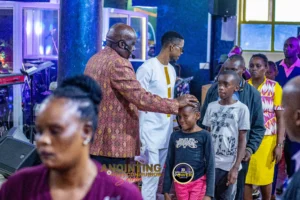
Following the teaching, the service moved into a time of impartation. In a structured and orderly manner, individuals came forward to receive the anointing. Oil was applied, and prayers were made over each person. This was not treated casually, but with reverence and expectation understanding that the outward act points to an inward spiritual work. As people received, there was a strong emphasis: this is not just a moment it is the beginning of a transformed walk with God.
Holy Communion: What It Means
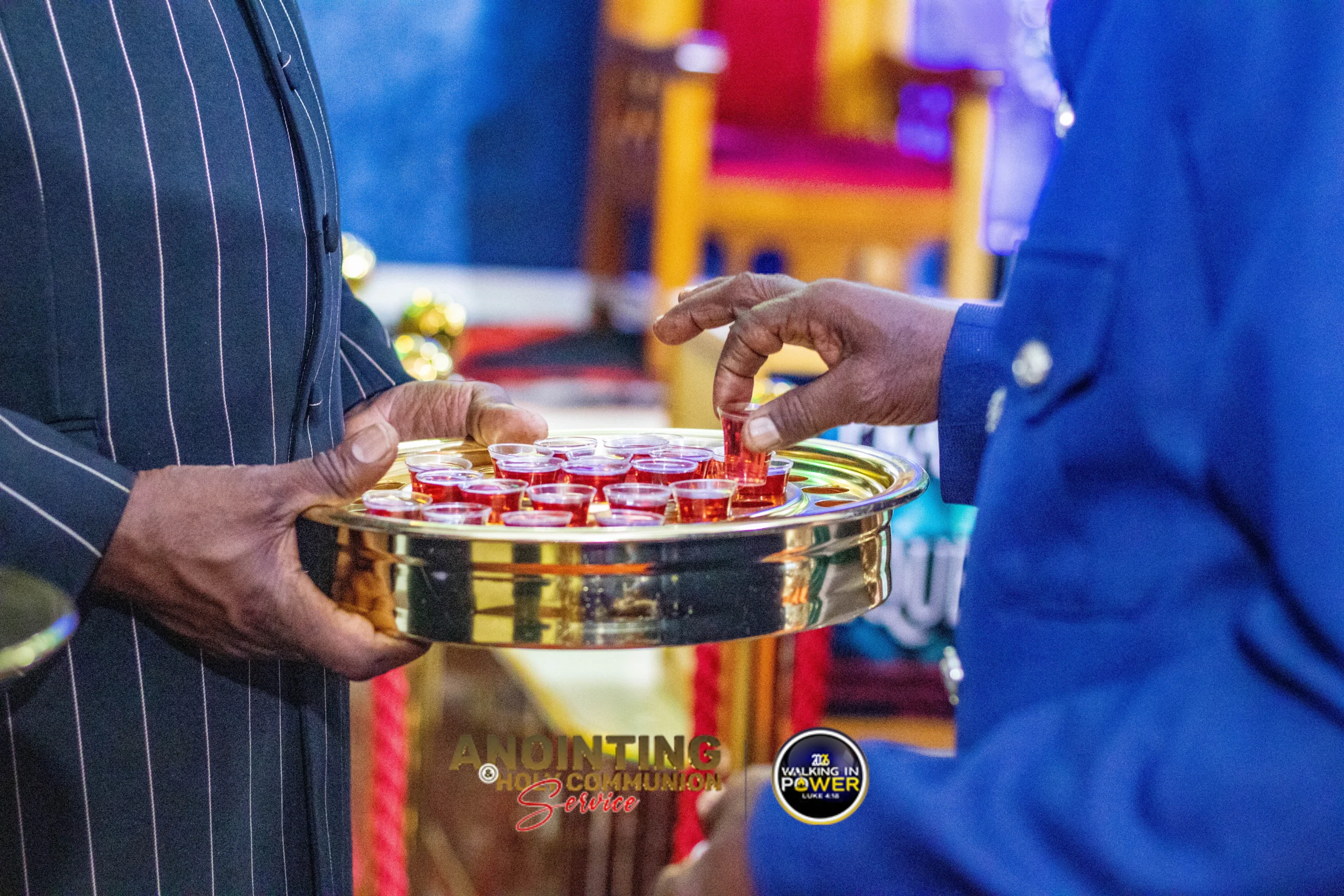
After the anointing, the service transitioned into Holy Communion bringing the congregation into a deeper moment of reflection and covenant. Holy Communion, also known as the Lord’s Supper, is one of the most sacred practices of the Christian faith. It is not simply a tradition, but a spiritual act of remembrance, proclamation, and participation in the finished work of Christ. As taught during the service, Communion carries three core meanings:
The bread represents the body of Christ, broken for our healing, wholeness, and restoration.
The cup represents His blood, shed to establish a new covenant between God and His people.
The act itself is a declaration every time believers partake, they proclaim the power of Christ’s sacrifice.
It is not just something you take. It is something you receive by faith.
How Holy Communion Was Observed
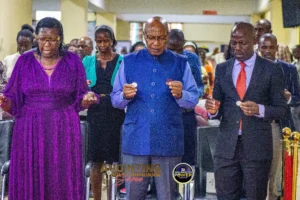
The Communion was administered in a spirit of order, reverence, and unity. The congregation was first led into a moment of self-reflection, aligning their hearts through repentance and gratitude. This step was important, as Scripture teaches the need to examine oneself before partaking. Bishop Peter then guided the church through the meaning of the elements. As the bread was received, the focus was on Christ’s body given for us. As the cup was taken, the focus shifted to His blood the seal of the new covenant. Together, the congregation partook, not as individuals, but as one body honouring the sacrifice of Christ and reaffirming their faith. The moment concluded with prayer, releasing God’s grace and covering over His people.
A Call That Remains
As the service came to a close, one message remained clear: an encounter with God demands a response. The anointing received was not meant to end at the altar. The Communion taken was not meant to remain a moment. Both were meant to shape how believers live moving forward walking in power, in discipline, and in alignment with God’s will.
Final Reflection
What took place on this day was more than a service. It was a moment of impartation, covenant, and spiritual renewal.
And now the responsibility shifts:
What will you do with what you received?